We offer refined, unrefined, deodorized, and winterized sunflower oil — suitable for retail, HoReCa, and industrial use. Bottling and bulk options are available.
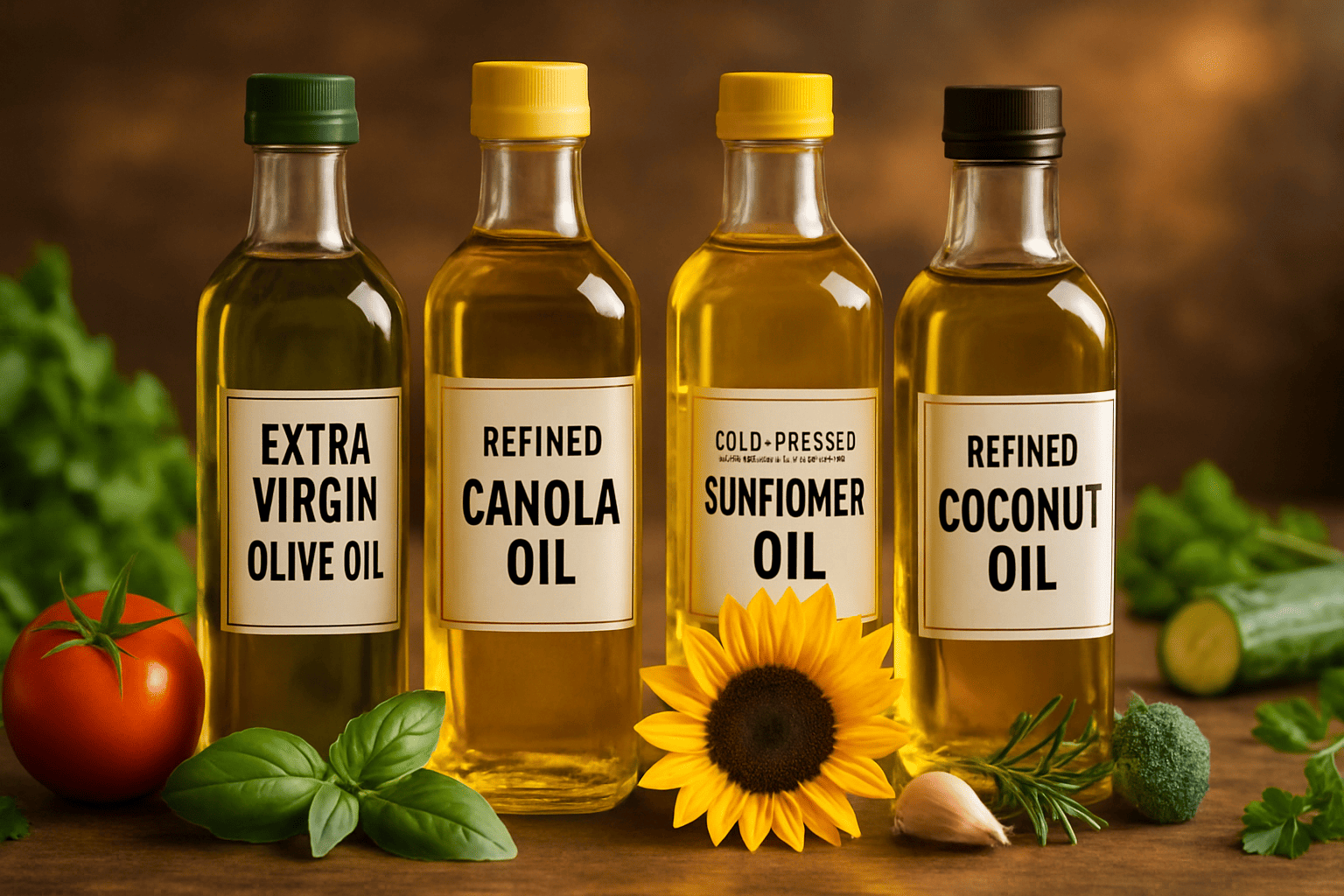
Refined or Unrefined Oil: Which One to Choose for Health and Perfect Dishes?
Oil is an essential ingredient in every kitchen. It adds flavor, helps prepare our favorite dishes, and serves as an important source of energy. Yet, when standing in the supermarket aisle, many face the same question: refined or unrefined oil? Which is better for frying? Is there a difference in health benefits? The choice of oil impacts not only the taste but also the nutritional value of your meals. In this article, we’ll explore the differences between refined and unrefined oils so you can make an informed choice for your kitchen.
What Is Refined Oil? Process and Characteristics
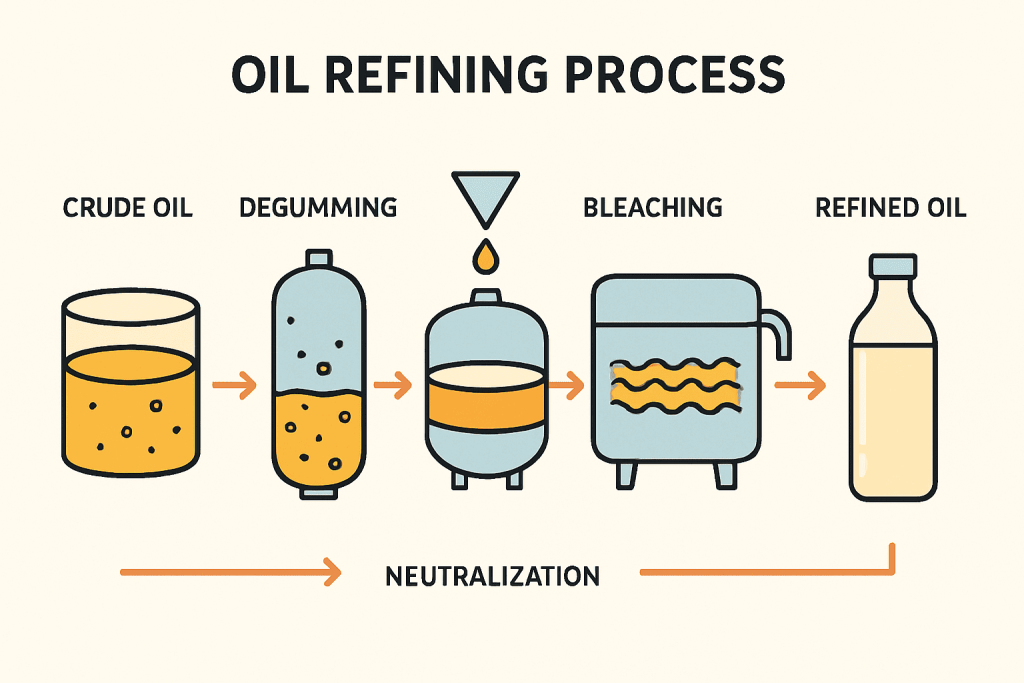
Refined oil undergoes multiple processing stages to remove impurities, odors, color, and flavor. This makes the oil more stable and versatile for different cooking methods.
Refining Process in Detail
The refining process includes:
- Cleaning: Removing mechanical impurities.
- Hydration and Neutralization: Eliminating phospholipids and free fatty acids that cause cloudiness and reduce shelf life.
- Bleaching: Removing pigments for better color.
- Deodorization: Removing compounds responsible for strong aroma and taste, resulting in a neutral flavor.
These steps create a product with high thermal stability — essential for frying.
Advantages of Refined Oil
- Neutral flavor and aroma: Won’t overpower other ingredients — ideal for frying and baking.
- High smoke point: Suitable for high-heat cooking without producing harmful compounds.
- Longer shelf life: Reduced risk of oxidation.
- Versatility: Works well for most cooking methods.
Disadvantages of Refining
- Loss of nutrients: Processing removes some vitamins (like vitamin E) and antioxidants.
- Lack of natural flavor: May be a drawback for those who prefer a more distinct taste.
Common Refined Oils
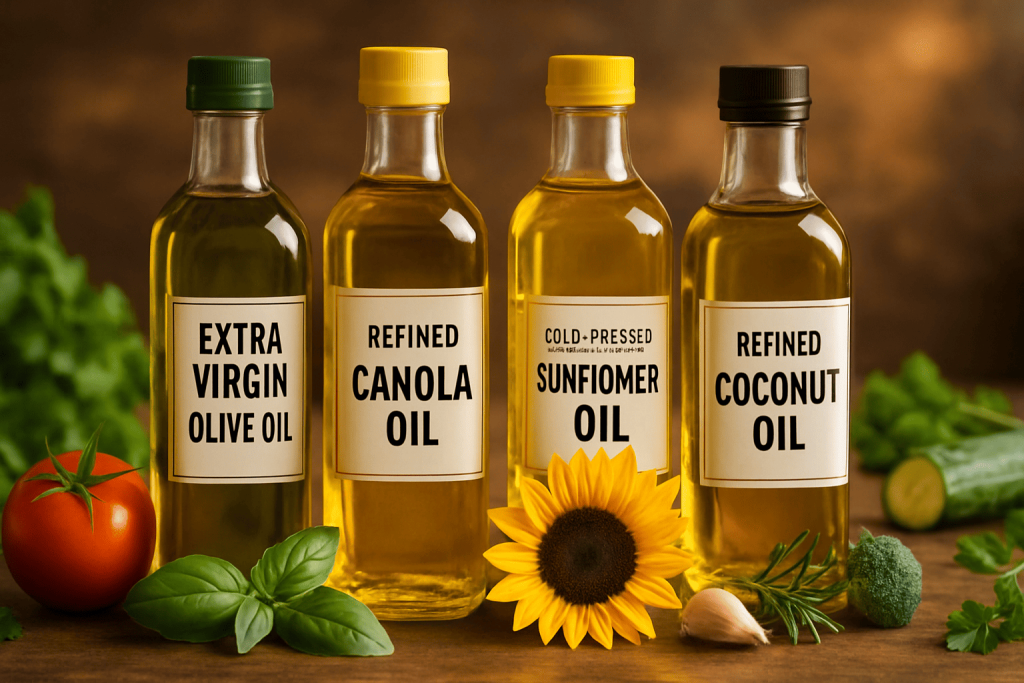
Popular refined oils include refined sunflower oil, corn oil, and canola oil.
What Is Unrefined Oil? Natural Goodness with Minimal Processing
Unrefined oil undergoes minimal processing — usually just filtration — preserving its natural color, aroma, taste, and nutrient content.
How Unrefined Oils Are Made
The most common method is cold pressing — pressing seeds or fruits without significant heating (max 40–50°C) to retain nutrients.
Advantages of Unrefined Oil
- Rich in vitamins and antioxidants: Contains vitamins E, K, polyphenols, and carotenoids.
- Strong flavor and aroma: Adds depth to dishes.
- Potential health benefits: Retains natural compounds beneficial for health.
Disadvantages of Unrefined Oil
- Lower smoke point: Burns at lower temperatures, forming harmful compounds.
- Shorter shelf life: Prone to spoilage due to natural compounds.
- Strong taste: Not always suitable for every recipe.
- Higher price: Due to gentle production methods.
Common Unrefined Oils
Examples include extra virgin olive oil, flaxseed oil, pumpkin seed oil, hemp oil, and unrefined sunflower oil with its signature “seed” aroma.
Key Differences: Refined vs. Unrefined Oils
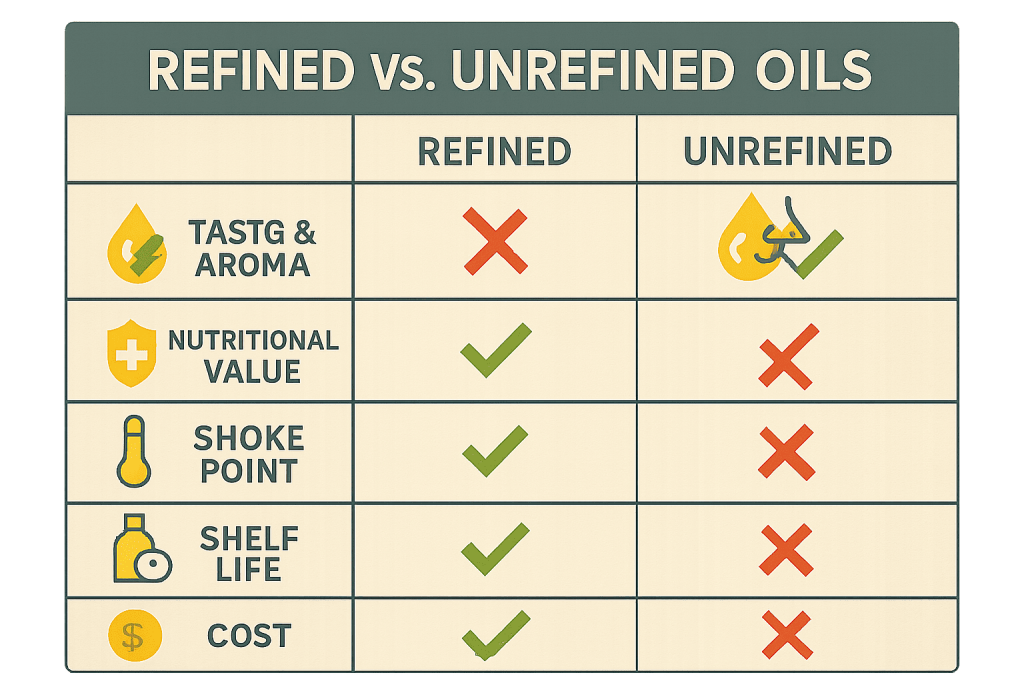
| Characteristic | Refined Oil | Unrefined Oil |
|---|---|---|
| Taste & Aroma | Neutral | Distinct, characteristic |
| Nutritional Value | Some vitamins and antioxidants lost | Max nutrient retention |
| Smoke Point | High (190–230°C+) | Low (107–190°C) |
| Shelf Life | Longer | Shorter |
| Cost | Lower | Higher |
Choosing Oils for Cooking Tasks
- For high-heat cooking: Choose refined oils like sunflower, canola, corn.
- For salads and cold dishes: Go for unrefined oils like extra virgin olive, flaxseed, pumpkin seed.
- For baking: Refined oils for neutral flavor; mild unrefined oils for added notes.
- For sauces & marinades: Refined for neutral base; unrefined for richer taste.
Final Takeaway
There is no single “best” oil — it depends on use. Refined oil is ideal for frying due to stability, while unrefined oil is perfect for cold dishes and adds nutritional value. For a healthy kitchen, keep both types and use them appropriately.
Key Points:
- Refined oil — high smoke point, neutral taste, ideal for frying.
- Unrefined oil — nutrient-rich, best for cold dishes.
- Smoke point is critical for safe cooking.
- Diversity and moderation are key.
Things Our Clients Ask Most
Take a look inside our facilities — from raw seed processing to high-tech oil bottling.
Interested in working with us?
Explore partnership opportunities or reach out to our sales team.
-
 Sunflower Oil for Export to the EU: Requirements, Standards, and Selection Criteria for Ukrainian Producers 02.08.2025
The European Union is one of the most attractive yet most demanding markets for Ukrainian agricultural products, particularly sunflower oil. Thanks to high quality and significant production volumes, Ukrainian sunflower oil has every opportunity to secure a strong position on European shelves. However, successfully entering this market requires not only a quality product but also […]
Read more